
Stem cell therapy
for knee pain.
A non-surgical option for knee arthritis and wear. Stem cells from donated umbilical cord tissue are placed in the joint to calm inflammation and support your body's own repair. The knee is where stem cell research is strongest.
Why stem cell therapy is different from other knee treatments
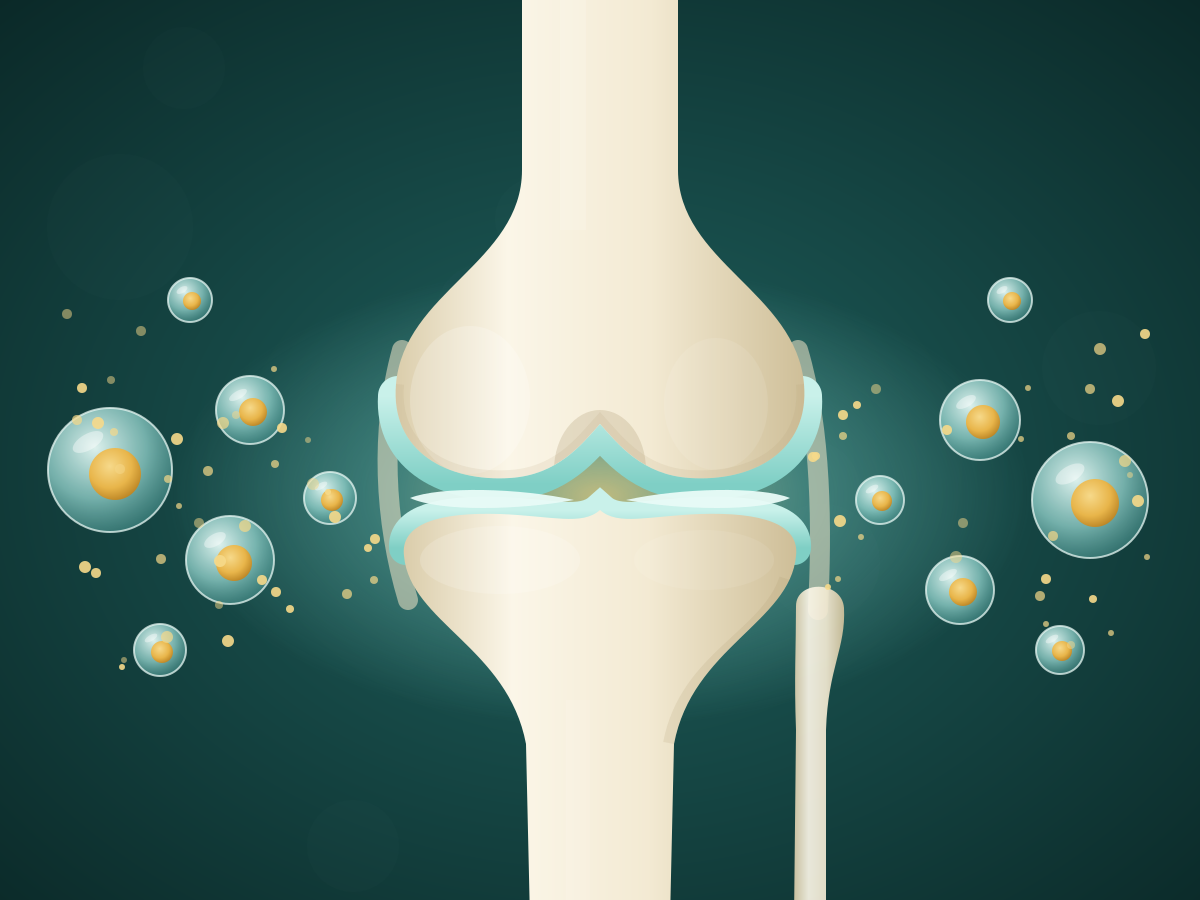
Pills and steroid shots turn down pain for a while. Stem cell therapy aims at the inflamed, breaking-down environment inside the joint.
It may be an option if your knee pain comes from arthritis, cartilage wear, an old meniscus or ligament injury, or chronic inflammation. The stem cells work by:
- Releasing anti-inflammatory signals inside the joint
- Delivering growth factors that support your own cells' repair work
- Adding hyaluronic acid and matrix, the joint's natural cushioning material
- Supporting better movement and function over the following months
It does not replace a knee that is bone on bone. If yours is too far gone, we'll tell you and point you to a surgeon.
What the knee research shows
More stem cell studies have been done on knee arthritis than on any other joint.
- Pain and function improvedA 2025 review of six studies of umbilical cord stem cells for knee arthritis found pain and function scores generally improved.
- No serious side effects reportedAcross those studies, temporary swelling and soreness were the most common effects.
- Results build over monthsRandomized trials measured improvement at 6 and 12 months, not days.
- The honest limitsThe studies are small, part of the improvement also shows up with placebo injections, and regrown cartilage is not proven. Stem cell therapy for knees is not FDA approved. Read the research in full.

Why patients choose stem cell therapy for knee pain
- Aims at the joint, not only the pain. Targets inflammation and tissue breakdown.
- No steroids. An alternative to repeated cortisone injections.
- No surgery. No incisions, no hospital stay, no long rehab.
- Little downtime. Light activity the same day.
- Young donor cells. Their strength doesn't depend on your age.
- Keeps options open. Knee replacement is still possible later if you need it.
- A plan built for you. Based on your exam and imaging.
Stem cell therapy vs. PRP and cortisone
Three injections that do three different things.
Cortisone
A steroid that suppresses inflammation. Relief can be quick but usually fades, it does not repair tissue, and repeated shots may speed up cartilage loss.
PRP
Platelets concentrated from your own blood release growth factors. It can help milder problems. Its strength depends on your own age and health.
Stem cell therapy
Young stem cells from umbilical cord tissue bring a broader mix of anti-inflammatory and repair signals, plus the joint's own cushioning material. We usually suggest it for moderate arthritis, or when cortisone or PRP has stopped helping.
What the treatment process looks like
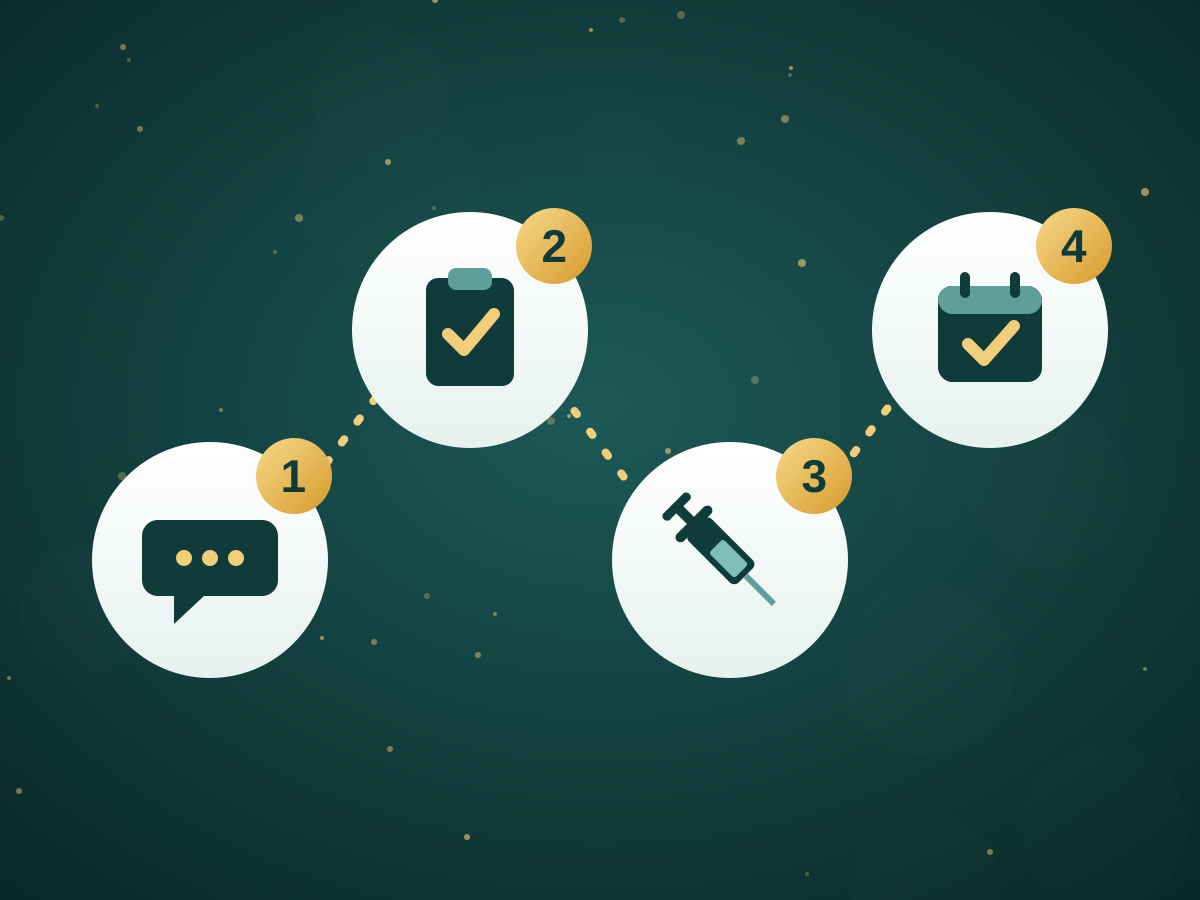
- Consultation and evaluationA thorough exam and, if needed, imaging to find the source and severity of your knee pain.
- ConsentWe go through what the treatment is, that it is not FDA approved, and the risks and alternatives. You sign only when your questions are answered.
- Targeted injectionA licensed medical provider places the stem cell product into the knee joint.
- RecoveryMost patients resume light activity the same day. Mild soreness or swelling usually settles within a few days.
When can you expect results?
- First weeksSome patients notice less swelling and pain early on.
- 1 to 3 monthsMovement and comfort often improve.
- 3 to 6 monthsStudies measure the main gains here and at 12 months. Results vary from person to person.
Find out if your knee is a candidate.
Knee pain doesn't have to decide what you can do. The first step is an exam and an honest answer on whether stem cell therapy is likely to help your knee.
Schedule a consultation
Here's your path to a pain-free life.
Five steps. We won't take you on unless we're confident we can help, so it all starts with a conversation.
-
1
Contact our team
Your path to confidence and wellness starts with a simple phone call or a request form on this site.
-
2
First visit consultation
We review your symptoms and expectations, perform a thorough exam, and run the diagnostics needed to build a plan for you. X-rays are taken if needed.
-
3
Follow up
We walk you through your findings and our recommendations, answer every question, and make sure we agree on the plan before anything begins.
-
4
Begin your personalized plan
Therapies start at the cadence your condition calls for. We monitor how you feel and how you're responding at every step.
-
5
Experience relief and wellness
This is where you start to see light at the end of the tunnel. A life of relief and confidence is possible for you. Ready?
Request a consultation

Join our growing list of patients
who are free from pain.
Five-star reviews from real patients
Expert guidance, impactful solutions, and compassionate providers. But we'll let our patients do the talking.
Life before this was getting very limited. I was having trouble standing, walking, physical activity of any sort. Now it's the exact opposite. More mobility, I'm able to stand for longer periods, I'm able to walk. A complete 180.
After 6 weeks, I no longer have the muscle spasms and most of the pain is gone. I'm sleeping better at night.
I was told by a medical doctor they'd give me opioids till I couldn't stand it, then amputate my feet. Three months later my pain is virtually gone, my sensations are back, and I can actually feel the carpet fiber.
After taking Gabapentin for years with the dosage going up year after year, I noticed improvement in about 2 weeks. My pain has decreased to about 40%. I'm so thankful.
My feet felt like they were burning up and frozen at the same time. This past fall we stained our entire cabin and deck on a ladder for a couple hours at a time with little discomfort.
Eight years of burning, lightning-bolt pain in my feet. Three weeks into the program I'm sleeping through the night and got rid of all my pills except one. I am enjoying life again.