
How stem cell
therapy works.
A plain-language guide for anyone deciding whether this is right for them. What stem cells are, where ours come from, what the law and the FDA say, what the research does and doesn't show, and what a treatment is like.

The idea in one paragraph

Your body repairs itself all the time, but cartilage, tendon and ligament heal slowly, and the signals that drive repair fade with age. Stem cell therapy places mesenchymal stem cells and the material around them into a damaged joint, where they release signals that calm inflammation and support your own cells' repair work.
It is not a cure-all, and it is not surgery in a syringe. It gives a struggling repair process help in the exact spot that needs it.
What stem cells are, and what's in the product
Our stem cells come from Wharton's jelly, the cushioning tissue inside the umbilical cord, along with the material they live in.
- Mesenchymal stem cellsYoung cells from the cord tissue. Their main job in a joint is signaling: they sense inflammation and release molecules that turn it down and prompt nearby cells to repair.
- Growth factors and cytokinesThe signals themselves. Growth factors tell cells to divide and build tissue. Many of the cytokines in Wharton's jelly are anti-inflammatory.
- Hyaluronic acid and matrixThe structural scaffold. Hyaluronic acid is the same lubricating molecule used in "gel shot" knee injections, here with collagen and other matrix proteins.
- ExosomesTiny packets that stem cells release to carry proteins and instructions to other cells. They deliver much of the signaling.
Do the cells turn into new cartilage? That was the early theory. Most researchers now think the cells work mainly by signaling, and that few of them stay in the joint long term. So the honest promise is less pain and better function, not a regrown knee. MRI results in the studies are mixed.

Where the cells come from
The umbilical cord tissue is donated after healthy, full-term births by mothers who have been screened for infectious disease. No pregnancy is affected. No embryonic or fetal tissue is involved, and Florida law forbids it.
The tissue is processed and stored by an FDA-registered tissue bank that holds accreditation from a body such as AABB or AATB. Each lot is tested before release, and comes with a report showing the cells were alive after thawing.
We'll show you the lot documentation for anything used in your care.
What the law and the FDA say

Stem cell therapy for joint pain is legal in Florida and not approved by the FDA. Both are true.
Florida. Since July 1, 2025, section 458.3245 of the Florida Statutes lets licensed physicians perform stem cell therapies the FDA has not approved, for orthopedic conditions, wound care and pain management. The law requires accredited sourcing, a live-cell report for each lot, a signed consent form, and the notice you see at the bottom of every page on this site.
The FDA. The only stem cell products the FDA has approved are cord blood products for certain blood disorders. It has not approved any stem cell or exosome product for joint pain, and it has warned companies that market umbilical cord and exosome products with claims to treat disease.
What that means for you. This is an elective treatment that you choose with full information. Talk to your primary care provider first. We'd rather you decide slowly than be surprised later.
What the research says, honestly

The research on stem cells for knee arthritis is encouraging and still young. Here is what the studies show.
Pain and function tend to improve. A 2025 review of six studies of Wharton's jelly stem cell injections for knee arthritis (97 patients) found that pain and function scores generally improved, with follow-up as long as four years in one study. No serious side effects were reported. Temporary knee swelling and soreness were the most common.
Trials against placebo show a smaller edge. A 2025 analysis of six randomized trials (300 patients) found that stem cell injections improved knee arthritis outcomes at 12 months. Another 2025 analysis of eight placebo-controlled trials (467 patients) estimated that half or more of the improvement also showed up in patients who got a placebo injection, and rated the evidence as low certainty.
Cartilage regrowth is not proven. MRI findings are mixed. Some studies saw changes in cartilage and some saw none.
Bigger trials are underway. A multi-center trial comparing Wharton's jelly with hyaluronic acid and saline for knee arthritis is registered in the United States. Most of the research so far is on knees, so results for hips, shoulders and the spine are less certain.
What that means for you. Results vary. Some patients feel a large change, some a moderate one, and some little. The stage of wear, your overall health and how closely you follow the plan all matter. Movement, weight management and strengthening remain the foundation, and stem cell therapy works alongside them.
- Ishak-Samrin et al., Journal of Functional Biomaterials, 2025: review of Wharton's jelly stem cells for knee arthritis
- Journal of Orthopaedic Surgery and Research, 2025: analysis of six randomized trials
- Yin et al., Frontiers in Medicine, 2025: placebo effects in stem cell injection trials
- ClinicalTrials.gov NCT04711304: Wharton's jelly vs. hyaluronic acid and saline
- Section 458.3245, Florida Statutes: Florida's stem cell therapy law
What a treatment is actually like

- Consultation and candidacyExam, history, and imaging if needed. We confirm the pain is coming from where we think it is and that the joint is a reasonable target. Some people are told no at this step.
- ConsentYou read and sign a consent form covering what the treatment is, that it is not FDA approved, the expected results, and the risks and alternatives. Ask anything.
- The injection visitThe skin is cleaned and numbed. A licensed medical provider places the stem cell product into the joint or soft tissue. The visit takes under an hour. No sedation.
- The first few daysMild soreness or fullness at the site is common and settles within days. We'll tell you which medications to avoid and for how long.
- Weeks to monthsIn the studies, improvement builds over one to six months. We re-check you on a schedule.
Questions patients ask us

Is stem cell therapy safe?
In the published studies of Wharton's jelly stem cells for knee arthritis, no serious side effects were reported. Temporary swelling and soreness were the most common. Any injection carries a small risk of infection, and unapproved products carry unknowns that approved drugs do not. The tissue is donor-screened and lab-tested, and we review your health history first.
Is it FDA approved?
No. The FDA has not approved any stem cell product for joint pain. Florida law allows licensed physicians to offer it for orthopedic conditions, wound care and pain management, with consent and sourcing rules.
Are these embryonic stem cells?
No. They come from umbilical cord tissue donated after healthy, full-term births. No embryo or fetus is involved.
Does it hurt?
Most patients describe pressure more than pain, since the skin is numbed. Soreness for a day or two afterward is common.
How many treatments will I need?
Many patients have one injection per joint. In one trial, patients who had a second dose did better than those who had one. We'll tell you up front what we expect for your case.
Is this covered by insurance?
Stem cell injections are generally not covered by Medicare or private insurance, so this is a self-pay treatment. The consultation and exam are a separate, low-cost step. Financing through Cherry is available for treatment plans.
What's the difference between stem cells and PRP?
PRP (platelet-rich plasma) concentrates platelets from your own blood, so its strength depends on your age and health. Umbilical cord stem cells come from young donor tissue and bring a broader mix of signals. The two have not been compared head to head in large trials. We'll explain which we recommend for you and why.
Who should not have this done?
Active infection, certain cancers, uncontrolled diabetes, bleeding disorders and some immune conditions can rule it out. So can a joint that is too far gone, where the honest answer is a surgical consult. We screen for all of this.
How soon can I get back to normal activity?
Light daily activity the same day. We'll ask you to hold off on heavy loading of the treated joint for a short period, then return to full activity as the joint allows.
Still have questions? Bring them.
The consultation is where this gets specific to you. Your joint, your imaging, your history, and a straight answer on whether stem cell therapy is likely to help.
Schedule a consultation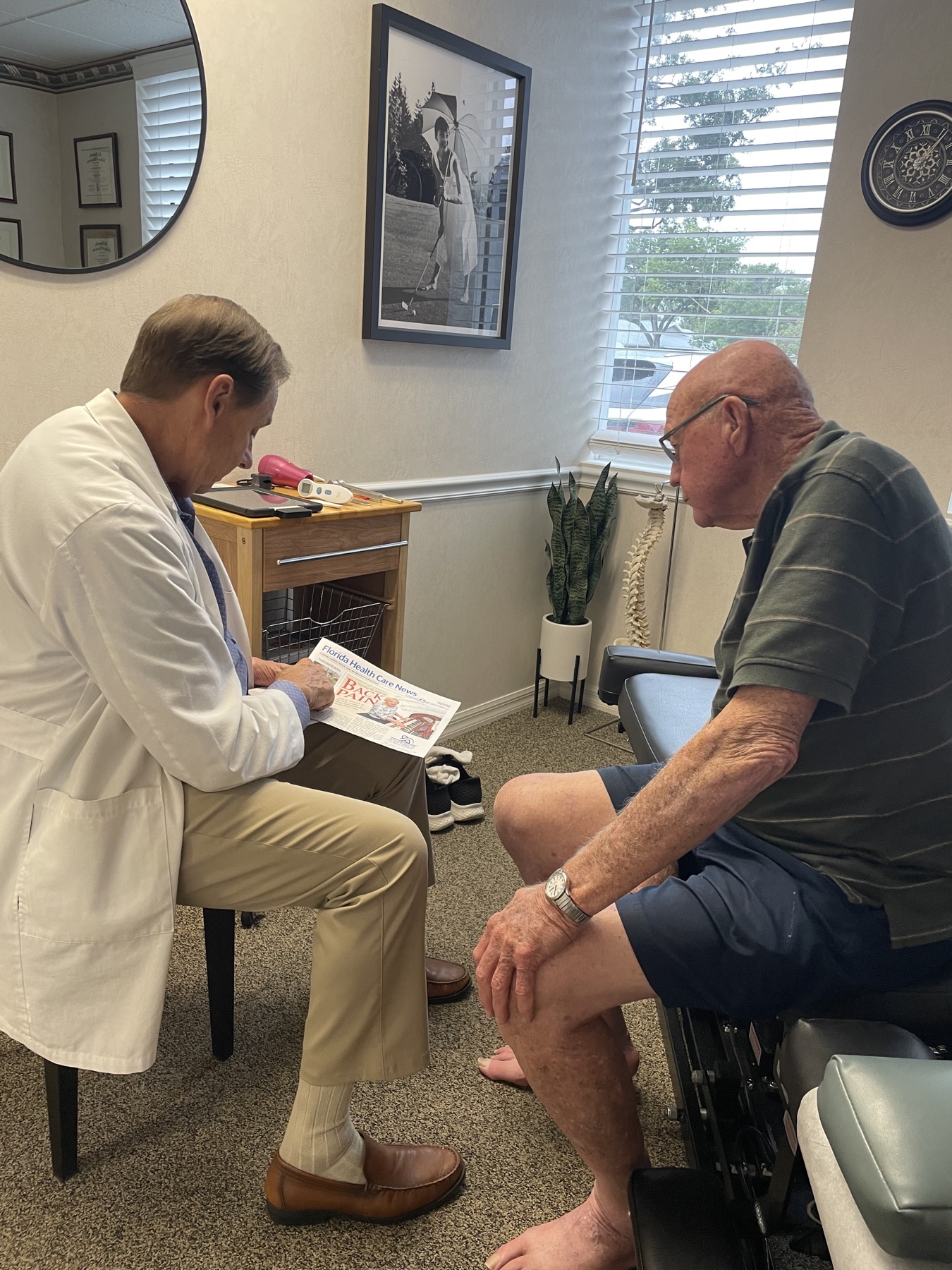
Here's your path to a pain-free life.
Five steps. We won't take you on unless we're confident we can help, so it all starts with a conversation.
-
1
Contact our team
Your path to confidence and wellness starts with a simple phone call or a request form on this site.
-
2
First visit consultation
We review your symptoms and expectations, perform a thorough exam, and run the diagnostics needed to build a plan for you. X-rays are taken if needed.
-
3
Follow up
We walk you through your findings and our recommendations, answer every question, and make sure we agree on the plan before anything begins.
-
4
Begin your personalized plan
Therapies start at the cadence your condition calls for. We monitor how you feel and how you're responding at every step.
-
5
Experience relief and wellness
This is where you start to see light at the end of the tunnel. A life of relief and confidence is possible for you. Ready?
Request a consultation